October 18, 2019
Reprinted from ACSM Newsroom
Oct 16, 2019
Individualized exercise Rx can improve survival and side effects, lower risks
(Indianapolis, IN) – New guidance from exercise oncology experts recommend systematic use of an “exercise prescription” by health care workers and fitness professionals in designing and delivering exercise programs that aim to lower the risk of developing certain cancers and best meet the needs, preferences and abilities of people with cancer. The American College of Sports Medicine (ACSM) convened the roundtable of experts from 17 partner organizations, which included the American Cancer Society and the National Cancer Institute—part of the National Institutes of Health, to review the latest scientific evidence and offer recommendations about the benefits of exercise for prevention, treatment, recovery and improved survival.
“With more than 43 million cancer survivors worldwide, we have a growing need to address the unique health issues facing people living with and beyond cancer and better understand how exercise may help prevent and control cancer,” said ACSM Immediate Past President Katie Schmitz, Ph.D., FACSM, who co-chaired the roundtable. “This esteemed, multidisciplinary group of leaders on the forefront of exercise oncology aimed to translate the latest scientific evidence into practical recommendations for clinicians and the public and to create global impact through a unified voice.”
“These recommendations are designed to help cancer patients incorporate physical activity into their recuperation, and they’re an important reminder that all adults should strive to be as physically active as their abilities allow for cancer prevention,” said Alpa Patel, PhD, senior scientific director of epidemiology research at the American Cancer Society.
The new evidenced-based guidance and recommendations include:
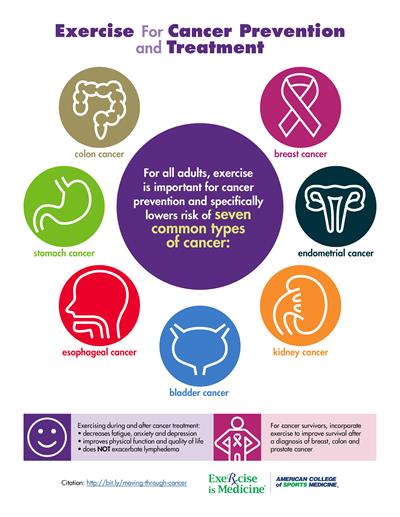
- For all adults, exercise is important for cancer prevention and specifically lowers risk of seven common types of cancer: colon, breast, endometrial, kidney, bladder, esophagus and stomach
- For cancer survivors, incorporate exercise to help improve survival after a diagnosis of breast, colon and prostate cancer
- Exercising during and after cancer treatment improves fatigue, anxiety, depression, physical function, quality of life and does not exacerbate lymphedema
- Continue research that will drive the integration of exercise into the standard of care for cancer
- Translate into practice the increasingly robust evidence base about the positive effects of exercise for cancer patients
The comprehensive review and recommendations are outlined in three academic papers published today in two scientific journals. “Exercise Guidelines for Cancer Survivors: Consensus Statement from International Multidisciplinary Roundtable” and “American College of Sports Medicine Roundtable Report on Physical Activity, Sedentary Behavior, and Cancer Prevention and Control” published in Medicine & Science in Sports & Exercise®, ACSM’s flagship research journal. The third paper, “Exercise Is Medicine in Oncology: Engaging Clinicians to Help Patients Move through Cancer,” was published in CA: A Cancer Journal for Clinicians, a flagship journal of the American Cancer Society.
Health care and fitness professionals should use the new recommendations when creating exercise programs for cancer patients and survivors. This includes formally and systematically using custom exercise prescriptions that best meet the needs, preferences and abilities of individuals living with and beyond cancer. Fitness professionals can obtain the Cancer Exercise Trainer certification collaboratively developed by ACSM and the American Cancer Society. Additionally, professionals and scientists should continue research that will drive the integration of exercise into the standard of care for cancer.
View and download the Exercise for Cancer Prevention and Treatment infographic.
To implement the recommendation for translating evidence into practice, ACSM and its Exercise is Medicine (EIM) initiative also introduced a new program, Moving Through Cancer. The clinician-focused program aims to ensure that all people living with and beyond cancer are assessed, advised, referred to and engaged in appropriate exercise and rehabilitation programming as a standard of care. Resources are available for oncology clinicians and patients, including a global, searchable registry of exercise programs at www.exerciseismedicine.org/movingthroughcancer.
Partner organizations that participated in the roundtable include: ACSM, American Cancer Society, the National Cancer Institute—part of the National Institutes of Health, Academy of Oncologic Physical Therapy, American Academy of Physical Medicine and Rehabilitation, American College of Lifestyle Medicine, American Physical Therapy Association, American Society of Clinical Oncology, Canadian Society of Exercise Physiology, Centers for Disease Control and Prevention, Commission on Accreditation for Rehabilitation Facilities, German Union for Health Exercise, Exercise and Sport Science Australia, Macmillan Cancer Support, National Comprehensive Cancer Network, Royal Dutch Society for Physical Therapy, Society of Behavioral Medicine, Society of Surgical Oncology and Sunflower Wellness.
October 14, 2019
 FALLS CHURCH, VA – Jennifer Bires MSW, LICSW, OSW-C, joins the Inova Schar Cancer Institute, a state-of-the-art cancer care destination in the D.C. Metro area, as the Executive Director of its nationally recognized Life with Cancer and Patient Experience programs.
Bires is a rising star in the psycho-oncology field. In 2017 she received the Oncology Social Worker of the Year award from the Association of Oncology Social Work. In addition to overseeing Inova Schar’s broad range of Life with Cancer and patient experience programming, Bires will lead efforts to expand Life with Cancer’s psychosocial initiatives to ensure patients are able to access patient-centered care and support resources regardless of where they live.
“We are proud to welcome Jennifer to the Inova Schar team and Life with Cancer family, as we deliver compassionate, collaborative and holistic cancer care, customized to the needs of each and every patient,” says John Deeken, MD, President of the Inova Schar Cancer Institute. “Her experience as an oncology social worker, providing cross-discipline collaboration and patient-centered care embody Inova Schar’s commitment: ‘Cancer. Care. We do both.’”
Bires joins Inova Schar from the Washington, DC-based Smith Center for Healing and the Arts, where she served as Executive Director, helping form key partnerships in clinical care and the community, and growing its Arts and Healing Program. She brings over a decade of experience as an oncology social worker, including at George Washington University, where she helped create impactful cancer support programming for families, young adults and patients.
Bires earned her Master of Social Work degree from Washington University in St. Louis. She regularly speaks on a variety of psychosocial topics and has co-written several articles.
Life with Cancer is the nationally recognized educational and emotional support program of Inova Schar Cancer Institute. With locations across Northern Virginia, Life with Cancer offers wellness and exercise programs, seminars, individual and family counseling and nurse navigation to anyone impacted by cancer at no cost, regardless of where they are being treated or where they live. All services are provided by Certified Oncology Nurses and Licensed Clinical Social Workers.
Learn more at inova.org/lifewithcancer
Comments Off on Inova Schar Cancer Institute Names Executive Director for Life with Cancer and Patient Experience | Category
In the News | Tags:
August 12, 2019
August 8, 2019
Reprinted from Springboard: Beyond Cancer
Cancer and its treatment can be stressful—for you and your caregivers. Practicing mindfulness and relaxation can help calm your mind, reduce stress, and sharpen your ability to focus.
Mindfulness and relaxation are ways you can reduce stress and feel more peaceful.
Mindfulness Overview
Mindfulness is slowing down to pay attention to what’s going on right here, right now. Some of the benefits of mindfulness are that it:
- Reduces stress, anxiety, and depression
- Increases positive emotions and enjoyment in daily life
- Encourages healthier eating habits
- Improves relationships
- Reduces parenting stress
- Helps people quit smoking
Take a Quiz: What’s Your Stress Level?
Take this quiz to find out how much stress you have been dealing with lately.
Mindfulness Strategies
Practicing mindfulness involves breathing methods, guided imagery, and other practices to relax the body and mind and help reduce stress.
Enjoy Simple Pleasures
In our busy world, it can be hard to slow down and notice the little things. Here are a few ways to use mindfulness to stop and smell the roses.
Love Your Favorite Things
- Eat your favorite food. Turn off the TV, place the food in front of you, look at it, taste it, and smell it. Enjoy it!
- Listen to your favorite song—or any music that you love!
Take a Journey in Your Mind
Think of yourself at the beach or in a garden or the mountains—anywhere you want. Close your eyes and think about what it would feel like to be there right now. Enjoy every little thing about this beautiful place!
Take a Walk Outside
Walk slowly and really focus on being there. Notice what you see, hear, and smell.
Be Mindful Through Stress and Bad Feelings
Sometimes we have thoughts that make us feel sad or stressed. Practicing mindfulness can help you work through these feelings.
Practice Self-Reflection
It’s easy to let negative thoughts spiral out of control. When you are having negative thoughts or feelings, follow these five steps:
- Stop and take a deep breath.
- Ask yourself, what’s really going on here?
- Remind yourself that your thoughts are “just thoughts.” Thoughts come and go. We all have thoughts, but having a thought doesn’t mean that it’s true or that it will last forever.
- Take another deep breath and move on with your day.
- Do something nice for yourself. Go for a walk, take a bath, paint your nails, call a friend, go to a movie, or play with a child or a pet. Do whatever feels good to you.
Accept Yourself and Others
Do you ever notice that you’re harder on yourself than you are on other people? Try to give yourself a break and treat yourself like you would treat a good friend.
Practice Self-Compassion
Whenever you’re being hard on yourself, try to be a little kinder with these three steps:
- Think about a time when things did not go the way you wanted, or a time when you felt like you said the wrong thing or messed up somehow. How did you feel? What were you telling yourself?
- If this same thing happened to your closest friend, what would you say to them?
- Even if it feels silly, try saying those things to yourself. Self-compassion means treating yourself like you would treat a good friend.
Take Time for Mindful Moments
Take some time to do something that you enjoy, like a hobby. You’ll have something else to think about instead of worrying about cancer.
Slow Down and Breathe
A great way to start practicing mindfulness is to set aside time (even 1 minute!) to slow down and breathe.
- Find a quiet spot where you can be by yourself for a few minutes.
- Sit down, take a deep breath, and close your eyes. Notice your breath.
- At some point (usually pretty quickly), other thoughts will pop up in your mind. That’s ok! Just bring your attention back to your breath.
- Focus on your breathing, right here, right now.
Relaxation Overview
Many people with cancer have found that practicing relaxation techniques has helped them cope with stress and feel less anxious. Try learning and practicing relaxation techniques to lower your stress.
Practice Relaxation Techniques
Set aside about 5 to 10 minutes a day, if possible, to practice one or more of these relaxation exercises. You also may be able to do them during a stressful time, such as during a medical test or treatment. Get started with our guided relaxation exercise videos.
Connect with Your Body’s Relaxation Response
Take some time to let go of tension and clear your mind with this relaxation exercise.
- Lie comfortably on your back or find a comfortable and quiet place to sit.
- Close your eyes and breathe gently and naturally through your nose.
- Relax all your muscles, starting at your toes and moving up to the top of your head.
- Focus on your breathing.
- Continue for 5 to 20 minutes.
- When you are done, sit quietly for several minutes, at first with your eyes closed and then with your eyes open. Wait a few minutes before standing up.
Practice Deep Conscious Breathing
Deep breathing can help keep stress in check. This exercise can be done with your eyes closed or open wherever you happen to be.
- Find a comfortable and quiet place to sit or lie down.
- Relax your face, jaw, neck, and shoulders. Gently place one hand on your chest and the other hand on your belly button.
- As you breathe in, allow the breath to expand your belly, chest, and lungs. As you breathe out, gently press your hands against your chest and belly to let out more air.
- Focus on steady breathing.
- Take your time.
Try Progressive Muscle Relaxation
Progressive Muscle Relaxation shows you how to relax your muscles through tension and release. This can help lower your overall tension and stress levels, and help you relax when you are feeling anxious. Practicing this exercise will help you learn what relaxation feels like, and to notice when you get tense during the day.
- Plan to take about 15 minutes to do the exercise.
- Find a quiet place where no one will disturb you.
- First, apply muscle tension to a specific part of the body. Take a slow, deep breath and squeeze the muscles as hard as you can for about 5 seconds.
- After about 5 seconds, quickly relax the tensed muscles. Exhale as you let all the tightness flow out of the tensed muscles. The muscles should feel loose as you relax them. It’s very important for you to notice and focus on the difference between the tension and relaxation.
- Stay relaxed for about 15 seconds, and then do the same thing for the next muscle group. Once you’ve gone through all of the muscle groups, take a moment to enjoy the relaxation.
Learn More About Mindfulness and Relaxation
The National Cancer Institute and the American Cancer Society have additional resources to help you, including learning to relax and for the person who has cancer (link is external).
August 7, 2019
By: Peterson, James A., Ph.D., FACSM

- WHAT IS IT? Laughter, typically, the response to humor, is a physical reaction in humans, consisting, as a rule, of rhythmical, often audible, contractions of the diaphragm and other parts of the respiratory system. As such, laughter is part of human behavior regulated by the brain, helping individuals clarify their intentions in social situations, as well as providing emotional context to their circumstances.
- THE BEST MEDICINE. Although laughter makes people feel better in the moment, there appear to be long-term health (both physical and mental) benefits as well. Accordingly, some experts recommend that individuals get 15 to 20 minutes of laughter a day.
- OH, TO BE A KID AGAIN. All in all, it goes without saying that happy people have more fun. In fact, individuals who choose to be happy and exemplify positivity tend to look for more opportunities to laugh. It’s been written (though never documented) that the average 4-year-old laughs 300 times a day, whereas the average 40-year-old only laughs four times a day. The importance of such an observation is reinforced by the oft-cited quote, “You don’t stop laughing because you grow old. You grow old because you stop laughing.”
- HEART HEALTHY. Research has shown that laughter has an anti-inflammatory effect that helps protect blood vessels and heart muscle from the damaging effects of cardiovascular disease. In fact, one study found that people with cardiac disease laughed approximately 40% less at life-related situations than those individuals without cardiac disease.
- IT’S NO JOKE. Laughter can have a positive impact on a person’s stress level. Not only does it decrease the release of stress hormones, but it also triggers the release of endorphins, the body’s natural feel-good hormones, which promote an overall sense of well-being, as well as, in some circumstances, temporarily relieve pain.
- STRETCHES THE IMAGINATION. Laughter allows people to entertain the absurd and imagine alternative possibilities. It enables individuals to see things from various angles and from a different perspective. All factors considered, by creating psychological distance, it allows people to have a sense of safety when they’re confronted by anxiety-provoking life situations.
- EVERY LITTLE BIT HELPS. Scientists have calculated that just 15 minutes of laughter a day will burn approximately 10 to 40 calories a day, depending on how much a person weighs and how hard that individual laughs. Such a caloric expenditure can result in a loss of 1 to 4 lbs a year. In that regard, it is important to note that tickling, which makes a person laugh, has a similar caloric burn.
- NOT A LEARNED BEHAVIOR. Humans are hardwired for laughter. Everyone has the capacity to laugh, including blind and deaf people. Arguably, laughing could be considered the universal language. Greetings may entail different meanings in various regions and areas of the world, but laughter is a sign of happiness everywhere on the planet. In fact, laughter is a sound that does not have any language.
- LAUGH AND THE WORLD LAUGHS WITH YOU. Researchers have found that laughing really is contagious. When someone sees someone smiling and laughing, their natural response is to do the same. As such, the brain responds to the sound of laughter and preps the muscles in the face to join in the mirth. Furthermore, the setting also matters. For example, a person is 30 times more likely to laugh when in a group, versus being alone.
- APLOMB. Laughter has been shown to increase a person’s level of self-esteem. Not only can laughing and smiling make a person feel better about themselves, they are appealing attributes that help boost a sense of confidence in social situations.
Reprinted from © 2019 American College of Sports Medicine
August 1, 2019
We are most grateful to our wonderful clients for so well representing Life with Cancer and to our staff who provides such incredible care.
WTOP-Beyond Medicine
Comments Off on WTOP: Beyond Medicine | Category
In the News | Tags:
July 6, 2019
Reprinted from Survivors’ Table
By Danielle Penick
We always hear about eating more produce and it’s a well known fact worth repeating, eating more fruits and vegetables helps with preventing chronic disease. But most of us are not eating enough, putting us more at risk for things like diabetes, high cholesterol, and even cancer. The Centers of Disease Control finds that only one in ten Americans are eating their recommended 5 servings a day. We know we should eat more, but many of us are overwhelmed with where to start. Do I have to change my entire way of eating? Or is eating this way is going to be expensive? What recipes do I use? What if I budget for extra produce and don’t like it? To what if it goes bad before I eat it? Some of us even get anxious starting if they have a spouse or family who doesn’t eat the same way. These are all reasonable concerns and I hear them from many of my patients and friends. But what if I told you it doesn’t have to be a huge uphill battle to eat better?
The simplest place to start is by enhancing what you are already eating. For example if you eat eggs at breakfast, just add veggies to an omelet or if you eat yogurt, cereal, or oatmeal, then add fruit to it. If you like to snack, try snacking on produce with hummus, cheese, or peanut butter etc. If getting your family on board with your new way of eating is a barrier, this is one way to make the change without drastically changing what your family is eating. They can even opt out of adding extra produce to their diets if they are extremely resistant to making changes. You can add veggies to your pizza, pasta, or casseroles, but your family can take them out or not add them to their plates (but who knows you might even inspire them to try it). You can also add fruit to ice cream, salads, pancakes, muffins, etc. Or try at meatless Monday and opt for veggies in place of meat. For example veggie tacos or veggie fajitas without the animal protein.
Some people like another method of just trying one new produce item per week. Meaning if you’re at the store, grab something you have never tried or seen before and take it home. It may inspire you to try a new recipe or could be a good conversation piece at home. You may learn more about nutrition or another culture depending on the origin of the fruit or vegetable you choose.
Another consideration if you are worried about your produce going bad is to buy frozen produce or even canned produce (soaked in light syrup, water, or light salt in place of the heavy syrup or high salt options). Keep these on stock at home and use them at your convenience—this will ensure you don’t have to worry about them spoiling. Frozen is a great option for steaming veggies as well since you can toss them in the microwave or stove.

Once you decide to make any changes it’s also important to look at your eating environment and what surrounds you. Just being around more produce in your home or at your work desk, increases the likelihood you will eat it. For example people who have a fruit bowl on their countertops or tables are more likely to eat fruit. If you have bags of sliced veggies in containers or baggies you are more likely to eat these as a snack than not. Or having dried fruit, apples, and bananas at your desk.
Many people feel less overwhelmed to just start by eating just one extra serving of produce each day and once this becomes the norm, then you can add another serving. Over time the goal is to follow the American Institute of Cancer Research’s New American Plate method by filling 2/3 of your plate with plant based foods. Of note, this also includes beans, nuts, seeds, and whole grains. A good goal is to aim for 1/2 of your plate with fruits and veggies and the other 1/3 for grains. With time you will be able to do this without thinking much about it.
One of the biggest barriers I hear about is perceived cost of produce. When you break it down you might be able to eat up to 3 servings of produce items for under $2 per day by looking at what’s on sale at the store or having frozen produce on hand. Check out conventional production methods as well since they are often cheaper than organic. If you opt for this choice just know that you will not be impacting your health or nutritional value by swapping for the cheaper option. I’ve written about this topic before, and the evidence has shown that neither production method is superior for health or nutritional value. If you have the time and resources growing your own supplemental garden may also be something you can look into. Eating in season can also help with reducing the cost of produce.
Try a variety of all colors and eating cooked and raw fruits and veggies. Each color represents a different vitamin or mineral and eating cooked produce items can enhance the amount of some nutrients, while it can also decrease the amount of other nutrients. For example, a raw tomato is high in vitamin C, but much of it is lost when you cook the tomato. However, lycopene is enhanced when it’s cooked. So it’s best to eat a variety of all colors and cooking methods. If you’re looking for more meal planning ideas for fruits and veggies, I recommend checking out Eating Well for ideas.
While it’s important to focus on a balanced diet, this way of eating may not be right for everyone while going through cancer treatment. If you are struggling to keep weight on or have swallowing issues, then this might be best reserved for a later time when weight loss is not of concern. Sometimes the goal is simply eating adequate calories and it may not include eating a lot of produce since they are low in calories if you can’t each much. This way of eating is good for helping to prevent cancer recurrence once treatment is completed or if you are well nourished. There’s no perfect way to eat more produce, but to succeed in your journey you just have to take that first step!
For more updates, you can follow Survivors’ Table on Facebook. Thanks for joining me on this journey! – Danielle
July 6, 2019
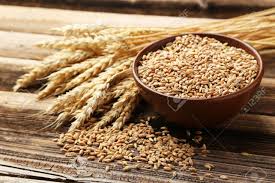
The AICR/WCRF Third Expert Report found strong evidence, for the first time, that eating 90 grams (about 3 ounces) of whole-grain foods daily reduces risk for colorectal cancer by 17 percent. Research also showed that eating greater amounts reduced risk even further.
Click here to download the pdf version of the 2018 Revised Version of the report.
June 22, 2019
The word “qi” in Chinese means “energy.” According to traditional Chinese philosophy, qi is a form of fundamental life energy that is found throughout the universe and is responsible for health and vitality. “Gong,” meanwhile, means “skill.” Qigong (the skill of attracting energy) is an ancient system of healing that combines postures, exercises (also known as “movements”), breathing techniques and meditation to improve and enhance the body’s supply of qi, and to increase one’s sense of well-being.
History of Qigong
No one knows exactly who invented qigong, or when it originated. Some scholars estimate the practice of qigong to be upwards of 5,000 years old, and believe that it was first implemented by monks and other teachers.
 Although qigong has been practiced for thousands of years, it remained relatively unknown in the United States until the 1970s, when acupuncture was first publicized. As the public began to understand and appreciate the benefits acupuncture had to offer, the use of other forms of traditional Chinese medicine, such as qigong, increased. Today, hundreds of thousands of Americans practice qigong every day, an interest shared by more than 60 million Chinese.
Concepts
Qigong has been influenced by many parts of Chinese philosophy, most importantly the Taoist philosophy, which holds to the belief that the universe operates within certain laws of balance and harmony, and that people must live within natural rhythms. These beliefs are rampant throughout qigong.
Traditional Chinese medicine shares many of the concepts of qigong, including the idea of energy patterns in the body. Qi is believed to flow through the body along certain channels, or meridians, with a meridian corresponding to each of 12 principal organs. With acupuncture, points on each meridian are stimulated to increase or decrease the flow of qi and promote healing. Similarly, qigong techniques are used to improve the balance and flow of qi throughout the meridians, and to increase the overall quantity and volume of qi.Qigong practitioners use the same points that practitioners of acupuncture and acupressure seek to stimulate.
Another important concept in qigong is the relationship between mind and body. In qigong philosophy, mind and body are not separated; rather, the mind is present in all parts of the body, and can be used to move qi throughout the body.
A third concept practiced in qigong is the relationship between yin and yang. Yin and yang are opposites, yet they interact with each other and influence the others actions. One of qigong‘s goals, in addition to improving the balance and flow of qi, is to balance yin and yang. Therefore, when qigong is practiced, complementary techniques are used to balance things out. For instance, a technique using the left hand may be followed by a technique involving the right hand; a strong technique may be balanced by a lighter technique, and so on.
Qigong Techniques
There are literally thousands of qigong exercises and exercise combinations. Specific techniques are used depending on the teacher giving the instruction; the school where one learns qigong; and the objective one is trying to attain.
 As mentioned previously, there are four major components of qigong. Postures may involve standing, sitting, lying down, or a combination of all three. Movements include long stretches, slow-motion exercises, thrusts, jumping, and bending. These postures and movements often occur together, and are used to strengthen and tone the body.
Breathing techniques and meditation comprise the other components of qigong. Sometimes, patients may hold their breath; other times, they may take deep breaths from the chest or abdomen, or relaxed breathing. Meditations are used to stimulate the mind and move qi throughout the body. Many meditations are visualization-type exercises in which the subject visualizes moving energy from one part of the body to another (or from one organ to another).
There are also two forms of qigong — internal and external. Internal qigong is performed by people who wish to increase their own energy and well-being. External qigong is usually performed by trained qigongmasters, who pass extra qi from themselves to patients to facilitate healing. While this may sound far-fetched in the West, external qigong is widely utilized in China. Entire medical qigong hospitals exist, in which practitioners combine external qigong, acupuncture, herbs and other forms of care to help subjects get well.
How (and Where) to Practice
Like any form of exercise, qigong takes discipline and dedication. Exercises should be performed every morning and evening, for a minimum of 15 minutes per session (advanced qigong sessions may last an hour or more). Qigong should be performed in a clean, pleasant environment, preferably outdoors, which provides fresh air and allows people to move freely. Jewelry should be removed, and loose, comfortable clothing should be worn.
 Those interested in practicing qigong are advised to practice once or twice a week, and ease into more sessions gradually. In addition, beginners should learn from an experienced qigong practitioner so as not to perform the exercises or techniques incorrectly. Qigong should not be performed on a full (or empty) stomach, nor should it be performed in extremely hot or cold weather.
Are There Any Side-Effects?
While side-effects are rare, they do occur occasionally in people who are just learning qigong, or practice it incorrectly. Subjects may feel dizzy, fatigued, or suffer from headaches or shortness of breath. Other side-effects include insomnia, emotional instability, anxiety, or a loss in concentration. These side-effects usually clear up with rest and proper instruction from a qualified qigong practitioner.
Regulation of Qigong
While qigong has been subject to much government in regulation in China, it is not regulated in the U.S. at this time. Different qigong schools may provide training for instructors, but as of yet, there are no generally accepted training standards. Qigong teachings themselves may also vary. To ensure quality training and instruction, contact a local or national qigong organization, such as the National Qigong Association or the Qigong Association of America, for a qigong practitioner in your area.
Reprinted from Acupuncture Today
June 22, 2019
From The American Institute for Cancer Research
March 26, 2019
Wild Alaska Rockfish with Cauliflower Steaks, Turmeric and Curry Butter
Sponsored by Alaska Seafood Marketing Institute (ASMI)

Enjoy this Wild Alaska Rockfish with Golden Cauliflower Steaks for a flavorful and creative presentation. The turmeric topping on the cauliflower contains curcuminoids which provide a warm, golden color. One of these compounds, curcumin, is studied for its role in cancer prevention. Cauliflower also boasts cancer-protective compounds called indoles and isothiocyanates. Mix up your healthy fish menu with this unique, delicious recipe.

Ingredients:
Cauliflower
- Olive oil spray
- 1 large (at least 3 lbs.) or 2 small heads cauliflower
- 1 Tbsp. extra virgin olive oil
- Salt and pepper, to taste
- 1 1/4 tsp. ground turmeric
- 1 tsp. coriander seeds, coarsely crushed with a rolling pin or mortar
- 1 lemon, sliced into wedges
Butter
- 1 lemon for 1 tsp. zest and 1 Tbsp. juice
- 4 Tbsp. unsalted butter, at room temperature
- 1 Tbsp. chopped fresh ginger
- 1 tsp. curry powder
- 1/8 tsp. salt
- Pinch of black pepper
Fish
- 2 Tbsp. extra virgin olive oil, plus 1-2 tsps. for coating foil lining
- 4 (6-ounce) Alaska rockfish fillets
- 1/2 tsp. salt
- 1/8 tsp. freshly ground black pepper
- 2 scallions, finely sliced, including some of the green part (for garnish)
- 2 Tbsp. chopped parsley
Makes 4 servings.
Per serving: 390 calories, 23 g fat (9 g saturated fat), 13 g carbohydrate, 36 g protein, 5 g dietary fiber, 560 mg sodium.
Prep Time: 20 minutes
Cook Time: 40 minutes
Directions
- Preheat oven to 450ºF. Spray or brush a rimmed baking sheet with olive oil.
- Slice cauliflower into steaks: Remove all outer leaves from cauliflower and stand it upright on a cutting board (trim the bottom of stem as needed to keep cauliflower stable). With a large knife, cut it into 3/4-inch thick slices. You will have some “scraps”—slices or florets of cauliflower – not attached to the core that fall apart, but you should get at least 4 slices that are intact.
- Roast cauliflower: Brush both side of steaks with oil, and toss “scraps” with a little oil. Arrange on the baking sheet, and sprinkle generously with salt and pepper, followed by turmeric and coriander. Squeeze lemon wedges over top. Roast 25 to 30 minutes, until golden and tender when knife tip is inserted into steak. Remove from the oven and set aside.
- Lower oven temperature to 400ºF.
- Make lemon-curry butter while cauliflower bakes: Zest lemon and squeeze juice. In food processor, process lemon zest and juice, butter, ginger, curry powder, salt and black pepper until combined. Scrape down the bowl once or twice as needed. Transfer to a bowl.
- Cook fish: Line baking sheet with foil and lightly brush with 1- 2 teaspoons olive oil. Set fillets on baking sheet. Brush with remaining olive oil and sprinkle generously with salt and pepper. Bake at 400ºF for 6 to 8 minutes, or until fish is cooked through and opaque. Remove from oven, cover loosely with foil, and let fish rest for 5 minutes.
- To serve: Cauliflower can be served warm or room temperature; return to oven for a few minutes to rewarm, if desired. Transfer cauliflower to large platter. Set fillets on top and dot each with curry butter. Sprinkle with chopped scallions and parsley and serve
*All AICR Health-e-Recipes meet AICR recipe guidelines and are reviewed and analyzed by AICR Registered Dietitians.







 Back To Top