Blog

Fitness training: Elements of a well-rounded routine

May 31, 2019
Reprinted from MAYO CLINC-Healthy Lifestyle

Fitness training: Elements of a well-rounded routine

Fitness training balances five elements of good health. Make sure your routine includes aerobic fitness, strength training, core exercises, balance training, and flexibility and stretching.

By Mayo Clinic Staff

Whether you’re a novice taking the first steps toward fitness or an exercise fanatic hoping to optimize your results, a well-rounded fitness training program is essential. Include these five elements to create a balanced routine.

Aerobic fitness

Aerobic activity, also known as cardio or endurance activity, is the cornerstone of most fitness training programs. Aerobic activity or exercise causes you to breathe faster and more deeply, which maximizes the amount of oxygen in your blood. Your heart will beat faster, which increases blood flow to your muscles and back to your lungs.

The better your aerobic fitness, the more efficiently your heart, lungs and blood vessels transport oxygen throughout your body — and the easier it is to complete routine physical tasks and rise to unexpected challenges, such as running to your car in the pouring rain.

Aerobic activity includes any physical activity that uses large muscle groups and increases your heart rate. Try walking, jogging, biking, swimming, dancing, water aerobics — even leaf raking, snow shoveling and vacuuming.

For most healthy adults, the Department of Health and Human Services recommends that you get at least 150 minutes of moderate aerobic activity or 75 minutes of vigorous aerobic activity a week, or a combination of moderate and vigorous activity. The guidelines suggest that you spread out this exercise during the course of a week. You can even break up activity into shorter periods of exercise and aim to move more during the day. Any amount is better than none at all.

You can also try high-intensity interval training, which involves alternating short bursts of intense activity (around 30 seconds) with subsequent recovery periods (around three to four minutes) of lighter activity. For example, you could alternate periods of brisk walking with periods of leisurely walking, or include bursts of jogging in your brisk walks.

Strength training

Muscular fitness is another key component of a fitness training program. Strength training can help you increase bone strength and muscular fitness, and it can help you manage or lose weight. It can also improve your ability to do everyday activities. Aim to include strength training of all the major muscle groups into your fitness routine at least twice a week.

Most fitness centers offer various resistance machines, free weights and other tools for strength training. But you don’t need to invest in a gym membership or expensive equipment to reap the benefits of strength training.

Hand-held weights or homemade weights — such as plastic soft drink bottles filled with water or sand — may work just as well. Resistance bands are another inexpensive option. Your own body weight counts, too. Try pushups, pullups, abdominal crunches and leg squats.

Core exercises

The muscles in your abdomen, lower back and pelvis — known as your core muscles — help protect your back and connect upper and lower body movements. Core strength is a key element of a well-rounded fitness training program.

Core exercises help train your muscles to brace the spine and enable you to use your upper and lower body muscles more effectively. So what counts as a core exercise? A core exercise is any exercise that uses the trunk of your body without support, such as bridges, planks, situps and fitness ball exercises.

Balance training

Balance exercises can help you maintain your balance at any age. It’s generally a good idea for older adults in particular to include exercises to maintain or improve balance in their routine exercises. This is important because balance tends to deteriorate with age, which can lead to falls and fractures. Balance exercises can help older adults prevent falls and maintain their independence.

However, anyone can benefit from balance training, as it can help stabilize your core muscles. Try standing on one leg for increasing periods of time to improve your overall stability. Activities such as tai chi can promote balance, too.

Flexibility and stretching

Flexibility is an important aspect of physical fitness, and it’s a good idea to include stretching and flexibility activities in a fitness program. Stretching exercises can help increase flexibility, which can make it easier for you to do many everyday activities that require flexibility.

Stretching can also improve the range of motion of your joints and may promote better posture. Regular stretching can even help relieve stress and tension.

Consider stretching after you exercise — when your muscles are warm and receptive to stretching. But if you want to stretch before a workout, warm up first by walking or exercising for five to 10 minutes before stretching.

Ideally, you’ll stretch whenever you exercise. If you don’t exercise regularly, you might want to stretch at least two to three times a week after warming up to maintain flexibility. Activities such as yoga promote flexibility, too.

Cover all the bases

Whether you create your own fitness training program or enlist the help of a personal trainer, your overall exercise plan should include several elements. Aim to incorporate aerobic fitness, strength training, core exercises, balance training, and flexibility and stretching into your exercise plan. It isn’t necessary to fit each of these elements into every fitness session, but factoring them into your regular routine can help you promote fitness for life.

Comments Off on Fitness training: Elements of a well-rounded routine | Category Fitness | Tags: ,,,,

Poor, Fine, Good, Better, Best: A Guide to Processed Foods

December 20, 2018

Reprinted from: Acefitness   

Poor, Fine, Good, Better, Best: A Guide to Processed Foods

by Michelle Zive
on

What do bagged spinach, canned tuna, olive oil, granola bars and frozen burritos have in common? They all are processed foods. Yet, we have been inundated with warnings about the harmful effects of eating processed foods. In fact, these foods have been blamed for our nation’s obesity epidemic, high blood pressure rates and the rise of type 2 diabetes. Based on the examples above, however, you can see that processed foods are more than packaged ramen noodles, potato chips and drive-thru chicken nuggets. This article helps you differentiate between the processed foods you should be cautious of and those that can play a role in a balanced, healthy diet.

What is Processed Food?

According to the Academy of Nutrition and Dietetics, processed foods include any food that has been deliberately changed in some way before consumption. Examples of processing include foods that are cooked, canned, frozen, packaged or changed in nutritional composition through fortification (adding folic acid to bread products or calcium and vitamin D to milk and juices). It also includes foods that are preserved (beef jerky or canned fruit) or prepared in different ways (fermentation).

Processed foods range from minimally to heavily processed, including:

  • Minimally processed foods—such as bagged spring mix lettuce, cut-up vegetables and roasted nuts—are simply pre-prepped for convenience.
  • Foods that are processed at their peak to preserve nutritional quality and freshness and include frozen fruit and vegetables, canned tomatoes and canned tuna.
  • Jarred pasta sauce, salad dressing and cake mixes are examples of foods that contain ingredients such as sweeteners, spices, oils, colors and preservatives, which are added for flavor and texture.
  • Ready-to-eat foods, such as cookies, breakfast cereals, and deli meat, are more heavily processed.
  • The most heavily processed foods on the processed food spectrum are often pre-made meals including frozen pizza and microwaveable dinners.

How to Incorporate the Best Processed Foods Into Your Diet

Processed foods can be helpful and convenient for preparing healthy meals. Unfortunately, most Americans get too many calories from the more heavily processed categories and not enough from lightly processed foods.

The key to consuming the healthiest processed foods is to be able to distinguish between those that have been lightly processed versus those that are heavily processed. Basically, lightly processed foods are ones you can recognize in their original form such as pre-cut apple slices, hard-boiled eggs, canned tuna and frozen vegetables. Those that are highly processed are not in their original form such as potato chips and crackers, or foods that are not naturally occurring such as sodas, cookies and candy. The best way to understand where foods fall along the food-processing spectrum is by understanding the Nutrition Facts Label and ingredient list. This is especially important when looking for hidden sugars, sodium and fats.

Added Sugars

Added sugars are any sugar that is not naturally occurring in the food and has been added manually. For example, milk and dairy have a large amount of lactose, which is a naturally occurring sugar in these products. However, sugars are added to fruited yogurt. Be aware that sugars are added to a wide variety of products including bread, fruit drinks, granola, protein bars, tomato sauce, canned or boxed soups, nut and seed butters, salad dressings, protein powders and sports drinks. When looking at the food label, some examples of names of added sugars are dextrose, fructose, raw sugar, nectar, honey, high-fructose corn syrup, brown sugar, cane sugar and fruit juice concentrate. Read a product’s ingredient list and look for added sugars among the first two or three ingredients. Beginning in July 2018, grams of added sugar will be included in the Nutrition Facts Label.

Sodium

Highly processed foods often have a substantial amount of salt added to preserve foods and extend shelf life. In fact, they are major contributors to sodium in our diets. Therefore, choose foods labeled no salt, low-sodium or reduced-sodium to decrease your sodium consumption. We need some sodium, but we often consume more than the Dietary Guidelines for American’s recommendation of less than 2,300 milligrams per day.

Fats

Added fats can help make foods more shelf-stable and give them texture and taste. While trans fats, which raise bad cholesterol levels and lower good cholesterol levels, are on the decline in processed foods, you still might find them when reading food labels. The Food and Drug Administration banned artificial trans fats from the food supply, but food companies have until 2018 to comply. Look for zero grams of trans fats and no partially hydrogenated oils in the ingredient list.

Below is a list of strategies for choosing processed foods that are good for you:

  1. Frozen vegetables and fruits: If fresh produce is not available or if you often find a “soup” of wilted and spoiled produce at the bottom of your refrigerator drawer, purchase frozen fruits and vegetables instead. Because of the process used to freeze produce (blanched and then quick-frozen), many of the nutrients (vitamins C and E) are the same or even higher in frozen produce as compared to fresh.
  2. Fermented foods: Foods such as yogurt, kimchi, kefir, sauerkraut and tempeh contain probiotics, which may help bolster the immune system and relieve constipation.
  3. Sprouted foods: Whole grains and beans are living seeds, and some processing with the right amount of moisture and temperature can make them sprout. These foods have been found to be easily digestible, have a minimal effect on blood-sugar levels, and contain more protein, fiber, and B vitamins than their non-sprouted counterparts. Look for “sprouted” on the food package.

Clearly, processed foods have a place in our busy lives. Prepackaged fruits and vegetables are a convenient way to eat healthfully. In addition, methods of processing, such as fermentation and sprouting can help us obtain the nutrients we wouldn’t otherwise be consuming.

Comments Off on Poor, Fine, Good, Better, Best: A Guide to Processed Foods | Category Nutrition | Tags: ,,,,

Cat Cow Pose

December 20, 2018

Cat/Cow Pose

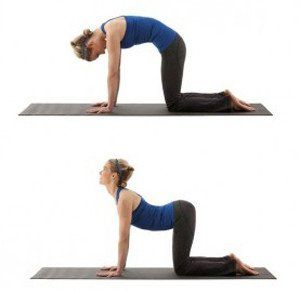
This is such a relaxing and releasing combination of postures if done properly. Keep your eyes closed to focus on connecting each movement to your breath.

  • Cat Cow Yoga Pose

    Come onto all fours with your hands below shoulders and your knees below your hip bones, keeping your back straight in a neutral position.

  • Inhale, lower your belly, draw your shoulder blades together and peel open your chest, lifting your gaze to find Cow Pose. Exhale, press against your palms, round into your back body as you draw your shoulder blades apart from each other, gazing toward your navel to find Cat Pose. Continue these movements following your breath.
  • Feel the arching movement up and down throughout your back while inhaling and exhaling with the rhythm of the movement.
  • Move slowly to feel the movement of each vertebra of your spine.

If you’re having problems getting to the floor, or, being on your knees, the pose can be done while seated in a chair.


Comments Off on Cat Cow Pose | Category Mind-Body | Tags: ,,

Breakfast Energy Drink

December 20, 2018
Reprinted from: The American Institute for Cancer Research

Breakfast Energy Drink

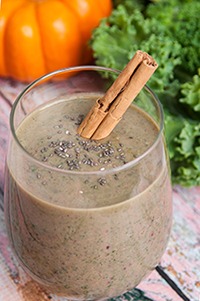
Energy drink with cinnamon sticksFebruary is Cancer Prevention Month – a time to focus on healthy habits that can lower your risk for cancer and other chronic diseases. Getting more fruit and vegetable servings is one important thing you can do today. And it just got easier. This nutritious breakfast smoothie combines leafy super greens, kale and spinach, with seasonal fruits, nuts and seeds for a cancer-fighting kick-start to your morning. Pumpkin will give you plenty of beta-carotene, a compound important in controlling normal cell growth and preventing

Makes 2 (about 1½ cup) Servings

Per serving: 231 calories, 12 g total fat (1 g saturated fat),
24 g carbohydrate, 13 g protein, 8 g dietary fiber, 111 mg sodium.

 Ingredients

  • 2 medium kale leaves, stems removed
  • 1 cup spinach leaves loosely packed
  • 1/2 cup fresh or frozen fruit
  • 1/3 cup plain canned pumpkin*
  • 3 Tbsp. seeds or nuts
  • 1 Tbsp. chia seeds
  • 1/2 tsp. cinnamon
  • 1/4 tsp. nutmeg
  • 1¼ cups soy or dairy milk
  • 1/2 cup water
  • 6-8 ice cubes (1 cup)

Directions

Combine all ingredients in blender or food processer and blend on high until smooth. Let sit for 1 minute to thicken before serving.

Comments Off on Breakfast Energy Drink | Category Recipes | Tags: ,,,,

Too Busy for Your Regular Workout?

December 20, 2018
Reprinted from:  MD Anderson Cancer Center

Holiday exercise: No Gym Required
By Laura Nathan-Garner

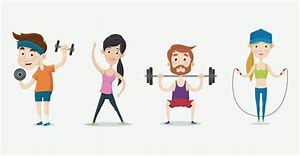
cartoon figures of exercising

Exercising won’t just help your body burn those extra holiday calories before they turn into extra body fat. It also helps curb stress, lower blood pressure and improve your mood, so you can actually enjoy the holidays.

Forget the excuses for not exercising this holiday season. Even if you’re too busy for your usual workout, you can still get the 150 minutes of weekly moderate physical activity that help you to maintain a healthy weight and lower your cancer risks. All it takes is adding some heart-pumping twists to the tasks already on your holiday to-do list.

Keep in mind that you can break up your weekly, and even daily, workout to fit your schedule. “If you plan to work out 30 minutes a day for five days, you can break those daily minutes into three 10-minute or two 15-minute chunks as your schedule allows,” says Karen Basen-Engquist, Ph.D., professor of Behavioral Science at MD Anderson.

Can’t get your full 30 minutes of exercise for the day? Even 15 minutes of daily exercise can increase your life expectancy by up to three years, says recent research.

Here’s how to turn your exercise excuses into heart-boosting opportunities this holiday season.

Shopping: Use the stairs and carry bags 

Stop looking for a parking space near the door and park far from the entrance. Or, if you’re taking the bus or train, get off a stop or two early. Either way, you’ll pack in some extra walking.

“For walking to count as exercise, you should be a little out of breath and feel your heart beating a little faster,” Basen-Engquist says.

While shopping, take the stairs instead of the elevator or escalator. If possible, carry your purchases instead of using a shopping cart. You’ll get your heart pumping and sneak in some strength training.

Hosting guests: Boost your house cleaning activities

Readying your home for visitors is a great way to slip in aerobic activity, but not just any tidying will do the trick.

“The most important thing is to get your heart rate up at a consistent level,” Basen-Engquist says.

So, focus on repetitive activities that use large muscle groups, like your legs and back. This includes vacuuming, mopping, scrubbing, gardening and even taking multiple trips upstairs to put away laundry or holiday decorations.

Traveling: Take physical activity breaks

You can get your heart pumping on the road with these tips:

  • Flying or taking the train or bus: While waiting to depart, take a brisk walk around the terminal — and skip the moving sidewalks. When you reach your destination, make your walk to baggage claim or the exit a quick one.
  • Driving: Add physical activity to gas and bathroom breaks. Kick around a soccer ball, throw a Frisbee® or take a brisk walk.
  • Staying at a hotel or with friends or relatives: Many hotels offer gyms and even exercise classes. If that’s not an option, find an exercise video online, or use an exercise DVD or an exercise app. Or, explore the area by taking a jog, hike or brisk walk.

Surrounded by family: Do group activities

Help your entire family exercise by teaming up to:

  • Train for a holiday race. Many cities hold a turkey trot on Thanksgiving.
  • Go hiking.
  • Go horseback riding.
  • Ice skate.

Extra tips to help you move more

Still can’t work exercise into your holiday activities? Try these tips:

  • Use your lunch hour to jog or take a brisk walk.
  • Take the stairs at work.
  • Schedule workouts ahead of time.
  • Enlist a friend or family member to walk with you during the holidays. Buddying up motivates both of you and gives you a chance to catch up and stay connected.

Remember, some things can wait until after the holidays, but your health isn’t one of them.

Comments Off on Too Busy for Your Regular Workout? | Category Fitness | Tags: ,,,

Green Goddess Buddha Bowl (Vegan, Gluten-Free)

August 15, 2018

Thanks to Sharon Palmer, the Plant-Powered Dietitian, for this tasty AND healthy meal!

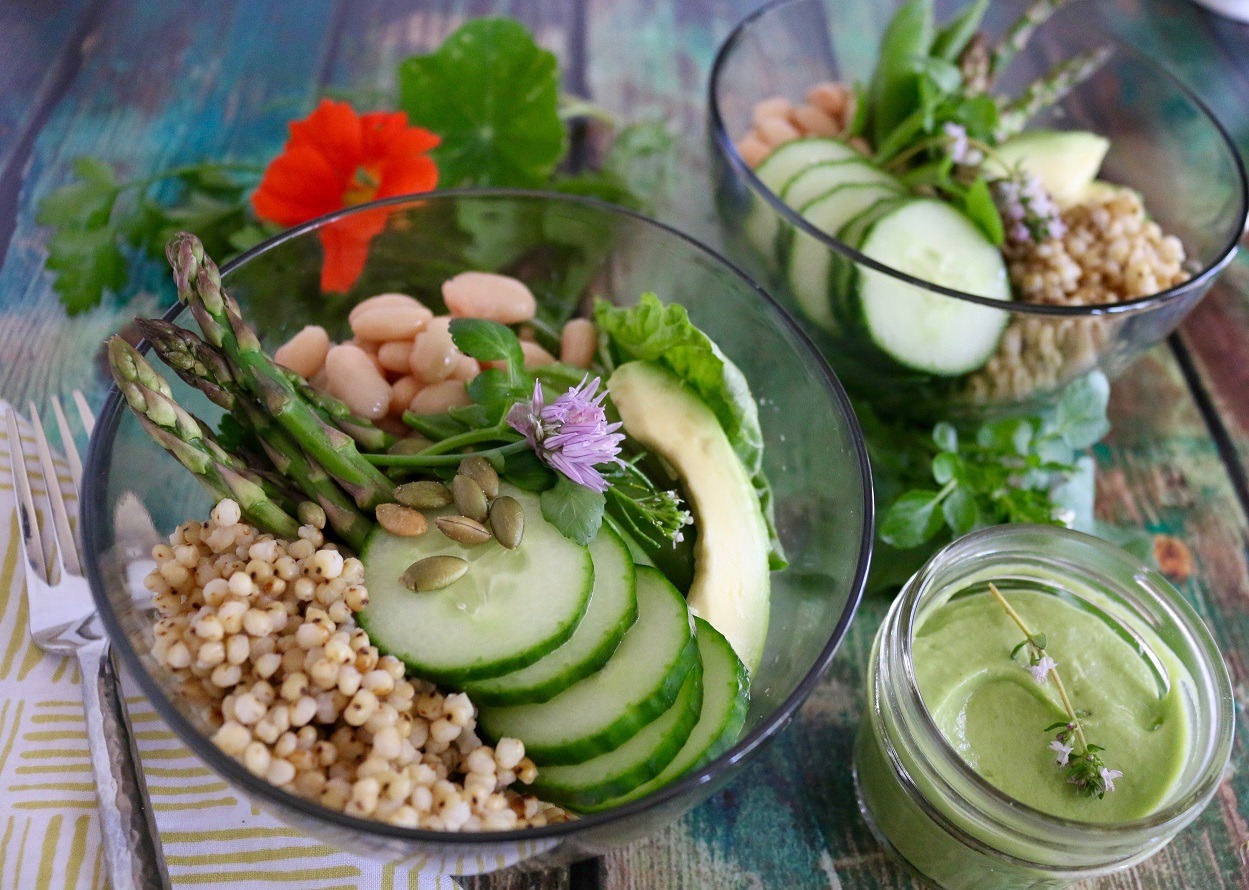
salad with grains and vegetablesBuddha bowls – light, healthy meals comprised of a whole grain, lots of vegetables, a healthful protein source, and a flavorful sauce – are all the rage.  This bowl combines the star nutrition power of whole grain sorghum and beans with cool green veggies, such as arugula, avocados, cucumbers, asparagus and pumpkin seeds.  Plus, it’s topped with a house-made, Green Goddess Dressing. This yields 4 entrée-size servings + 2 tablespoons dressing

Ingredients

Buddha Bowl:
    • 2 cups cooked whole grain sorghum, cooled
    • 1 15.5-ounce can white beans (i.e., Great Northern, cannellini)
    • 1 bunch fresh asparagus, trimmed, sliced
    • 4 cups packed baby arugula leaves
    • 1 medium avocado, sliced
    • 1 medium cucumber, sliced
    • ¼ cup pumpkin seeds
Green Goddess Dressing:
  • 1 1/2 tablespoons plain, unsweetened plant-based milk (i.e., soy, almond, coconut)
  • 1/4 ripe large avocado, peeled, sliced
  • 1/4 cup diced cucumber, with peel
  • 3 tablespoons chopped fresh herbs (i.e., dill, parsley, oregano, basil, thyme, cilantro)
  • 1 stalk green onion, white and green parts, diced
  • 1 small garlic clove
  • Pinch white pepper
  • 2 tablespoons lemon juice, freshly squeezed

Instructions

To make Buddha Bowls (makes 4):
    1. Cook whole grain sorghum to make 2 cups, according to package directions, and cool, draining any remaining liquid.
    2. Rinse and drain white beans and set aside.
    3. Blanch asparagus by cooking it in boiling water for 3-4 minutes, until tender, but bright green; set aside.
    4. Arrange 1 cup arugula leaves at the bottom of each large, individual serving bowl (4).
    5. Arrange over the arugula leaves in each bowl (4):
¼ of the white beans (about ½ cup)
½ cup cooked, cooled sorghum
¼ sliced avocado
¼ of the cucumber slices (about ½ cup)
¼ of the blanched, cooled asparagus
A dollop (about 2 tablespoons) of Green Goddess Dressing (see below)
Sprinkle with 1 tablespoon pumpkin seeds
    1. Serve immediately.
To make Green Goddess Dressing:
  1. Place all of the dressing ingredients into the container of a small blender and process until smooth.
  2. Makes 1/2 cup (4 servings).

Notes

This recipe is excellent for meal prep by preparing 4 individual servings in sealed containers and refrigerating it to be enjoyed during the week. You can also serve this recipe in one large dish by following instructions and arranging all ingredients in one large salad bowl instead of 4 individual serving bowls. If you prefer more dressing with the bowls, you may double the dressing recipe, and keep leftovers in the refrigerator in a sealed container for up to 1 week.

Nutrition information for 1 serving (Buddha bowl): 372 calories, 8 g total fat, 1 g saturated fat, 0 mg cholesterol, 16 mg sodium, 67 g carbohydrate, 17 g fiber, 3 g sugar, 17.5 g protein

Nutrition information for 1 serving (Green Goddess Dressing): 21 calories, 1 g total fat, 0 g saturated fat, 0 mg cholesterol, 4 mg sodium, 2 g carbohydrate, 1 g fiber, 0.5 g sugar, 0.5 g protein

To visit Sharon’s site go to Sharon Palmer The Plant-Powered Dietitian

Comments Off on Green Goddess Buddha Bowl (Vegan, Gluten-Free) | Category Recipes | Tags: ,,,,

Avocado Zucchini Soup w/ Cucumber Salsa

July 30, 2018

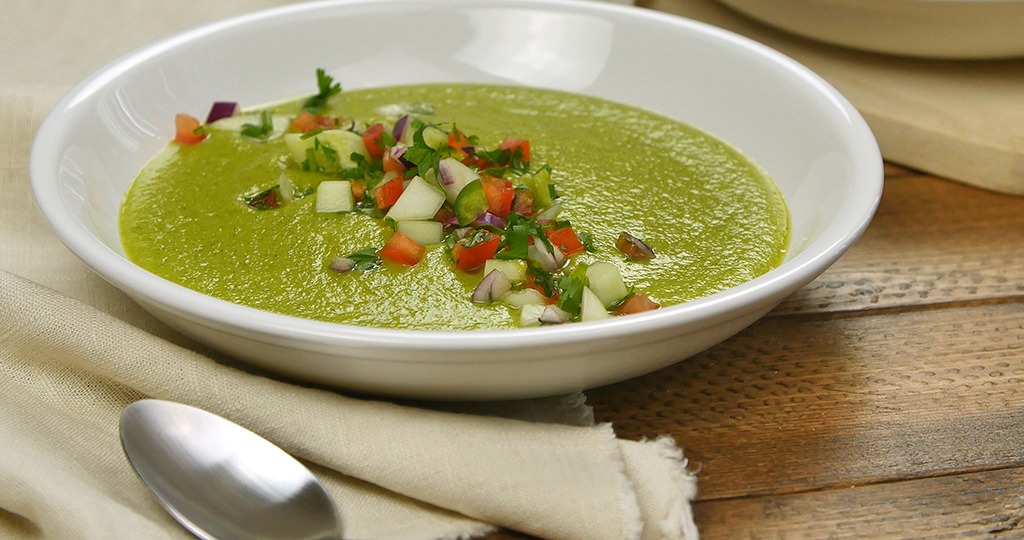
bowl with avocado zucchini soupThis refreshingly cool soup boasts crisp zucchini and creamy avocado.  Fiber from summer squash and the avocado’s healthy monounsaturated fat help you fill up and stay fuller longer.  The vegetable broth and onion base, along with creamy almond milk, provide a delicious flavor boost but still keeps it to only about 100 calories per serving.  Top with a cucumber salsa for a fresh contrasting crunch.

 Ingredients

4 (1 cup) Servings

For the Salsa:

  • 1 peeled and finely diced medium cucumber(about 2 cups finely diced)
  • 2 tablespoons lime juice(from about 1 to 2 limes)
  • 1/2 cup chopped cilantro or chopped parsley

For the Soup:

  • 2 medium zucchini(around 3 to 4 cups chopped)
  • ½ cup thinly sliced green onion, divided
  • avocado, halved and pitted
  • ¾ cup unsweetened plain almond milk
  • 1 cup low-sodium vegetable broth
  • 1/8 tsp. ground cumin, optional
  • 1/8 teaspoon salt
  • 1/8 teaspoon black pepper

Directions

For the Salsa:

For the Soup:

  • Peel and roughly chop the onion; trim the ends off each zucchini and roughly chop too.
  • In a large saucepan, over high heat, combine broth, zucchini and ¼ cup onion. Cover and bring to a boil.  Uncover, reduce heat and let simmer 6 minutes or until zucchini is tender.  Remove from heat and set aside for 20 minutes.
  • In a blender, combine zucchini mix, avocado, cumin (if using), remaining 1 Table spoon lime juice and almond milk. Cover and puree until smooth.  Leaving soup in blender, refrigerate it for 2 hours.
  • When ready to serve, re-blend soup. Additional almond milk for thinner consistency, if desired.
  • Pour into serving bowls. Top with salsa and serve.

PER Serving: 108 calories, 7.5 g total fat (1 g saturated fat), 10 g carbohydrate, 3 g protein, 5 g dietary fiber, 285 mg sodium

Reprinted from: American Institute for Cancer Research

Comments Off on Avocado Zucchini Soup w/ Cucumber Salsa | Category Recipes | Tags: ,,,,,,

What Type of Meditation is Best for You?

July 12, 2018

What Type of Meditation Is Best for You?

One of the most in-depth meditation studies to date shows that different practices have different benefits.

As citizens of the 21st century, we face many problems that come with an industrialized and globalized world. We’re confronting climate change and poverty in the midst of plenty; wars and political instability are driving millions of people to leave their homes and seek refuge. At the same time, we’re witnessing increases in stress-related diseases, depression, and narcissism. Skillful solutions to these problems will require new forms of global cooperation, mutual understanding, and compassion across nationalities and cultures.

I’m not a lawyer or a politician, but a psychologist and neuroscientist. So research on how to train helpful mental and social capacities is my way to contribute to a more healthy, communal, and cooperative civilization.

For the past five years, that research has taken the form of the ReSource Project, one of the longest and most comprehensive studies on the effects of meditation-based mental training to date. Lots of research treats the concept of meditation as a single practice, when in fact meditation encompasses a diversity of mental practices that train different skills and different parts of the brain. Our goal was to study the specific effects of some major types of mental practices and distinguish their effects on well-being, the brain, behavior, and health—and, in particular, discover which practices could help build a more compassionate and interconnected world.

Our findings are still emerging, as my team and I continue to analyze a multitude of data. The results so far have been mostly encouraging, sometimes surprising, and crucial to understand for meditation practitioners and teachers.

Three types of mental training

In the ReSource Project, we asked over 300 German adults ages 20-55 to attend a two-hour class every week and practice for 30 minutes a day at home. The lessons and practices were designed by myself together with an expert team of meditation teachers and psychologists over the course of several years. They include a multitude of secularized meditations derived from various Buddhist traditions, as well as practices from Western psychology. Over the course of the study, participants moved through three different training modules, which each began with a three-day retreat:

  • Presence (3 months). This module focuses on training attention and internal body awareness. The exercises include scanning your body, focusing on the breath and bringing your attention to the present moment whenever your mind wanders, and bringing attention to the sensations of hearing and seeing.
  • Affect (3 months). This module focuses on training positive social emotions like loving-kindness, compassion, and gratitude, as well as accepting difficult emotions and increasing our motivation to be kind and helpful toward others. In the Affect and Perspective modules, there are two daily core practices: one classic meditation and one 10-minute partner exercise, with participants assigned to a new partner every week on our mobile application. In the Affect module, partners take turns sharing their feelings and body sensations while recalling difficult or gratitude-inducing experiences in their lives, and practicing empathic listening.
  • Perspective (3 months). This module focuses on meta-cognitive skills (becoming aware of your thinking), gaining perspective on aspects of your own personality, and taking the perspective of others. In this module, the partner exercise includes taking turns talking about a recent experience from the perspective of one aspect of your personality—for example, as if you were fully identified with your “inner judge” or “loving mother”—while the other partner listens carefully and tries to infer the perspective being taken.

Three cohorts moved through these modules in different orders, allowing us to discern the effects of a specific training module and compare it to the other modules. In other words, the cohorts acted as “active control groups” for each other. Another group of participants didn’t do any training but was still tested: Every three months, we measured how participants were doing with a barrage of more than 90 questionnaires, behavioral tests, hormonal markers, and brain scans, to see what (if anything) improved after each module.

When I first launched this study, some of my colleagues thought a year-long mental training course was crazy, that participants would drop out right and left. But that’s not what happened: In fact, less than 8 percent of people dropped out in total. Long after the study ended, we witnessed people logging on to our app and practicing; to this day, I know of people who still self-organize to practice the 10-minute daily partner exercises together—presumably because they found the practices so transformational.

Different benefits for different practices

Ultimately, we found that the three training modules had very different effects on participants’ emotional and cognitive skills, well-being, and brains—which means that you can expect different benefits depending on the type of meditation practice you engage in.

Attention. According to our study, attention already improved after just three months of training, whether it was mindfulness-based or compassion-based. Participants who completed the Presence or Affect modules significantly improved their scores on a classic attention task. Surprisingly, no further benefit was observed after six or nine months of training, maybe due to the attention task we used (a “cue-flanker” test). It seems, therefore, that attention can be cultivated not only by attention-focused mindfulness practices but also by social-emotional practices such as the loving-kindness meditation.

Loving-Kindness MeditationLoving-Kindness Meditation

Strengthen feelings of kindness and connection toward others

Try It Now


Compassion. Are basic mindfulness practices such as paying attention to the breath or body scan enough to make you a kinder, more compassionate person? Or do you explicitly need to focus on these qualities of the heart in your meditation practice? This question is the source of a big debate in mindfulness research.

In our study, one of the ways we measured compassion was by showing participants videos of people sharing stories of suffering from their life and asking them to report how they felt after watching. Ultimately, three months of attention-based Presence training didn’t increase compassion at all. Only participants who had taken the Affect module—which explicitly focuses on care-based social and emotional qualities—became more compassionate.

Theory of mind. If we want to resolve conflicts across cultures, theory of mind—the ability to understand other people’s mental states and put ourselves in their shoes—is a crucial skill.

We measured theory of mind with the same video stories, but this time we asked participants to answer questions about the person’s thoughts, intentions, and goals. It turned out that only one module—the Perspective module—helped participants improve their theory of mind at all (though these effects were not strong). Practicing attention or compassion in the Presence or Affect modules didn’t help people take the perspective of others. Interestingly, people who got better at theory of mind also showed better self-understanding: They were able to identify more and more parts of their own personality, like that “inner judge” or “loving mother.”

Brain plasticity. These different behavioral changes were also reflected in the brain. Using magnetic resonance imaging, my colleagues and I analyzed the volume of gray matter in different areas of participants’ brains.

Typically, gray matter thins over time as people age. But after three months of attention-based Presence training, participants actually showed a higher volume of gray matter in their prefrontal regions, areas related to attention, monitoring, and higher-level awareness.

After three months of compassion-based Affect training, however, other regions became thicker: areas that are involved in empathy and emotion regulation, such as the supramarginal gyrus. Most importantly, this thickening in insular regions of the brain predicted increases in compassionate behavior.

Finally, we observed specific thickening in another set of brain regions after the Perspective module. Gray matter in the temporo-parietal junction, an area that supports our perspective-taking abilities, became thicker in people who also improved at theory of mind tests. This is the first study to show training-related structural changes in the social brains of healthy adults and to reveal that it really matters what you practice—the observed brain changes were specific to different types of training and coincided with improvements in emotional and cognitive skills.

Social stress. To measure social stress, we gave participants a notoriously stressful task: delivering a speech and then performing math calculations to an audience trained to roll their eyes, look bored, and point out errors. This makes people feel socially rejected and out of control, like something is wrong with them; it stimulates most people’s bodies to produce a lot more of the stress-related hormone cortisol, which we measured in saliva.

Surprisingly, three months of mindfulness-based attention and internal body awareness training didn’t help people cope better with this stressful task. But those who practiced the two social modules, Affect and Perspective, did reduce their cortisol stress response by up to half compared to the control group. We suspect that the daily partner practices in these modules helped ease people’s fear of being evaluated. We face potential evaluation by others every day, and learning to listen non-judgmentally and to be less reactive probably allows us to approach those socially stressful situations more calmly.

Gratitude Meditation

Gratitude Meditation

Feel grateful as you reflect on all the gifts in your life

Try It Now


The fact that the mindfulness-based Presence module did not reduce stress at the hormonal level was surprising at first, since previous research has shown that mindful attention training can reduce stress. But much of this earlier research asks people about their stress levels with questionnaires, rather than measuring biological markers of stress. When using questionnaires, we found the same thing: After three months of Presence practice, people said they felt less stressed, as they did after all the other modules. Even though it certainly matters how stressed people subjectively feel, cortisol is considered the hallmark of a stress response and is linked to important health outcomes. Given that this was not reduced by mindfulness attention training alone, we should be wary of generalized claims about its stress-reducing effects.

Social connection. The partner practices, which were part of the Affect and Perspective modules, helped participants feel closer to each other. In fact, they felt closer and closer each week of practice, even in the moments just before doing a partner practice and even when they were going to meet a partner for the first time. Thus, their general feelings of interdependence and interconnection with others seemed to increase over time.

Not only did people boost their feelings of social closeness, but they also disclosed more and more personal information about themselves. Earlier in the module, partners were timid and shared less; maybe they’d talk about the difficult experience of missing the bus on the way to work. But after three months, they went much deeper, sometimes sharing about parental conflicts or lifelong personal issues. This is the kind of vulnerability that’s needed for people in diverse groups to cultivate a sense of interconnection and common humanity.

Body awareness. One of the most common ways to measure how aware people are of their body signals is through a heartbeat perception task. In this task, people are asked to sit quietly and tap out the rhythm of their hearts, while we’re recording their actual heartbeat. The higher the correlation between such objective and subjective measures, the higher your body awareness.

Why does body awareness matter? Research suggests that it’s related to our emotional understanding and our health. We found that the more accurate people are at perceiving their heartbeat, the more they’re able to notice and label their emotions; they score lower in alexithymia, a diminished capacity to recognize your emotions that is common among many psychological disorders like autism and depression. Learning how to become less alexithymic could be a very powerful tool to help patients with emotional disorders.

Body Scan

Body Scan

Feeling tense? Feel your body relax as you try this practice

Try It Now


Surprisingly, people who practiced three months of present-moment-focused body awareness through practices like body scans didn’t get significantly better at heartbeat perception. Why? The simple answer is that three months of practice is too short. Only after six months of contemplative practice did participants’ body awareness improve to a significant level, and after nine months it improved even further. I suspect it would improve even more after another year of practice.

Some effects take time to develop—something we should remember whenever we sign up for a weekend meditation course or download a new meditation app promising us big results in just a few minutes or days!

Towards a more compassionate world

To summarize, mindfulness and meditation are incredibly broad concepts, and our research suggests that they should be differentiated more. It really matters what type of mental practice you engage in. Different types of mental training elicit changes in very different domains of functioning, such as attention, compassion, and higher-level cognitive abilities.

Every practice has its specific benefits, but looking at the overall pattern of findings in the ReSource Project, it seems that compassion-based social and emotional practices are powerful ways to develop many beneficial skills, including (self-)acceptance, well-being, attention, compassion and altruism, and lower social stress.

The good news is that with only about 30 minutes of practice a day, you can significantly change your behavior and the very structure of your brain. However, some improvements, like your capacity to perceive signals from your body, take time to develop. Even nine months is just a start.

Our research also showed how objective measures of people’s biology or behavior can diverge from what they believe about themselves on psychological trait questionnaires. When we’re talking about benefits like lower stress or greater kindness, people may think they’re improving while their actions or their bodies don’t actually change.

The story about meditation and mindfulness will become more complex over the years. Besides looking at the different effects of different types of mental practices, researchers are also exploring individual differences and how certain genes or certain personality traits influence how much you benefit from different practices. All of this research is moving us to a point where we don’t necessarily advocate mindfulness for all, but can suggest specific practices with specific benefits for specific people.

In an increasingly complex world, one of today’s most urgent questions is how we can cultivate greater global compassion and a better understanding of each other across cultural and religious divides. Our findings cast doubt on the notion that simple mindfulness-based mental training aimed only at improving attention and optimizing your own mind will have far-reaching consequences for global cooperation and responsibility. Instead, training that focuses on the interdependence of human beings, on ethical as well as social qualities—from feelings such as compassion to cognitive skills like perspective taking—may be important not only for individual health but also for communal flourishing.

This essay is adapted from a talk by Tania Singer, “Plasticity of the Social Brain: Effects of a One-Year Mental Training Study on Brain Plasticity, Social Cognition and Attention, Stress, and Prosocial Behavior,” given at the International Positive Psychology Association’s 5th World Congress in 2017.

Reprinted from: Greater Good Magazine

Comments Off on What Type of Meditation is Best for You? | Category Mind-Body | Tags: ,,,

Cancer Nutrition Guide for a Healthy Diet

July 4, 2018

Eating a healthy diet and being physically active are very important for people diagnosed with cancer, both during and after cancer treatment. HEAL Well: A Cancer Nutrition Guide  from the American Institute for Cancer Rbasket of colorful foodesearch, offers practical, evidence-based  suggestions about diet, nutrition and physical activity.

Your oncology healthcare team can provide valuable insights and direction in your efforts for healthy eating and on ways to become more physically active during and after your cancer treatment. However, it’s important you keep them informed about what you are taking and what diet plans you are following. Ask  your medical team if you have any risk factors that need to be addressed when creating your food and activity plan.

Comments Off on Cancer Nutrition Guide for a Healthy Diet | Category Nutrition | Tags: ,,,,

Phytochemicals: The Cancer Fighters in Your Foods

June 26, 2018

colorful fruits and vegetables

Phytochemicals: The Cancer Fighters in Your Foods

Phytochemicals are naturally occurring plant chemicals (phyto means plant in Greek). They provide plants with color, odor and flavor.  Once we eat them, however, research shows they can influence the chemical processes inside our bodies in helpful ways.

Findings from laboratory studies have shown that phytochemicals have the potential to:

  • Stimulate the immune system
  • Block substances we eat, drink and breathe from becoming carcinogens
  • Reduce the kind of inflammation that makes cancer growth more likely
  • Prevent DNA damage and help with DNA repair
  • Reduce the kind of oxidative damage to cells that can spark cancer
  • Slow the growth rate of cancer cells
  • Trigger damaged cells to commit suicide before they can reproduce
  • Help to regulate hormones

Steps to Take Now

While research continues, the best bets for achieving the maximum health benefits possible include:

  • Eat a varied diet high in a variety of vegetables, fruits, whole grains and beans
  • Favor brightly colored or strongly flavored vegetables and fruits, which are often the best sources of phytochemicals
  • Stick to food sources – phytochemicals in supplement form may not be as easily absorbed as those from food.

A Guide to Phytochemicals

Thousands of phytochemicals have been identified so far, and scientists have only begun to investigate their promise. This chart lists some of the phytochemicals attracting serious scientific attention, identifies food sources and outlines potential benefits.

Phytochemicals
Phytochemical(s)
Plant Source
Possible Benefits
Carotenoids
(such as beta-carotene, lycopene, lutein, zeaxanthin)
Red, orange and green fruits and vegetables including broccoli, carrots, cooked tomatoes, leafy greens, sweet potatoes, winter squash, apricots, cantaloupe, oranges and watermelon May inhibit cancer cell growth, work as antioxidants and improve immune response
Flavonoids
(such as anthocyanins and quercetin)
Apples, citrus fruits, onions, soybeans and soy products (tofu, soy milk, edamame, etc.), coffee and tea May inhibit inflammation and tumor growth; may aid immunity and boost production of detoxifying enzymes in the body
Indoles and Glucosinolates
(sulforaphane)
Cruciferous vegetables (broccoli, cabbage, collard greens, kale, cauliflower and Brussels sprouts) May induce detoxification of carcinogens, limit production of cancer-related hormones, block carcinogens and prevent tumor growth
Inositol
(phytic acid)
Bran from corn, oats, rice, rye and wheat, nuts, soybeans and soy products (tofu, soy milk, edamame, etc.) May retard cell growth and work as antioxidant
Isoflavones
(daidzein and genistein)
Soybeans and soy products (tofu, soy milk, edamame, etc.) May inhibit tumor growth, limit production of cancer-related hormones and generally work as antioxidant
Isothiocyanates Cruciferous vegetables (broccoli, cabbage, collard greens, kale, cauliflower and Brussels sprouts) May induce detoxification of carcinogens, block tumor growth and work as antioxidants
Polyphenols
(such as ellagic acid and resveratrol)
Green tea, grapes, wine, berries, citrus fruits, apples, whole grains and peanuts May prevent cancer formation, prevent inflammation and work as antioxidants
Terpenes
(such as perillyl alcohol, limonene, carnosol)
Cherries, citrus fruit peel, rosemary May protect cells from becoming cancerous, slow cancer cell growth, strengthen immune function, limit production of cancer-related hormones, fight viruses, work as antioxidants
Comments Off on Phytochemicals: The Cancer Fighters in Your Foods | Category Nutrition | Tags: ,,,
Top